Fee disclosure before confirmation
The convenience fee is shown as a separate line before the taxpayer confirms. The office receives the full tax amount.
Need to pay a fine, fee, or bill? Use the link on your notice or your agency’s website.
Information for people making a payment
GovPayPlan processes property tax, business licenses, and fees for county tax collectors and treasurers. Payments are made online or at the counter, with the convenience fee disclosed before the taxpayer confirms. Checks and cash, which remain common for larger bills, are recorded by Cashier users in the same ledger. Every payout carries a settlement statement, and revenue distribution applies the allocation across funds and taxing entities.
The convenience fee is shown as a separate line before the taxpayer confirms. The office receives the full tax amount.
Cashier users record checks and cash against the parcel or account, with reference numbers and receipt details. No processing fee applies.
Installment plans with reminders by text and email for taxpayers paying delinquent balances over time. The office decides which balances qualify.
Revenue distribution applies fixed, percentage, and remainder rules across funds and entities, produces recipient reports, and exports journal entries.
Monthly, weekly, or daily payouts by plan tier to the office’s registered bank account, with a settlement statement for each.
Four roles with unlimited users. An auditor can be given Read-Only access at no cost.
These examples are generic. None describes a specific customer.
Online volume peaks in the last week before the deadline. The portal stays available at all hours, and each day’s payments appear in the office reports by method and date.
A taxpayer pays a property tax bill by check. The Cashier records it against the parcel and prints a receipt. The check is deposited through the office’s existing process.
After settlement, the distribution policy allocates collections across the county, school district, and special districts. Each recipient receives a PDF summary and CSV detail, and finance exports the journal entries.
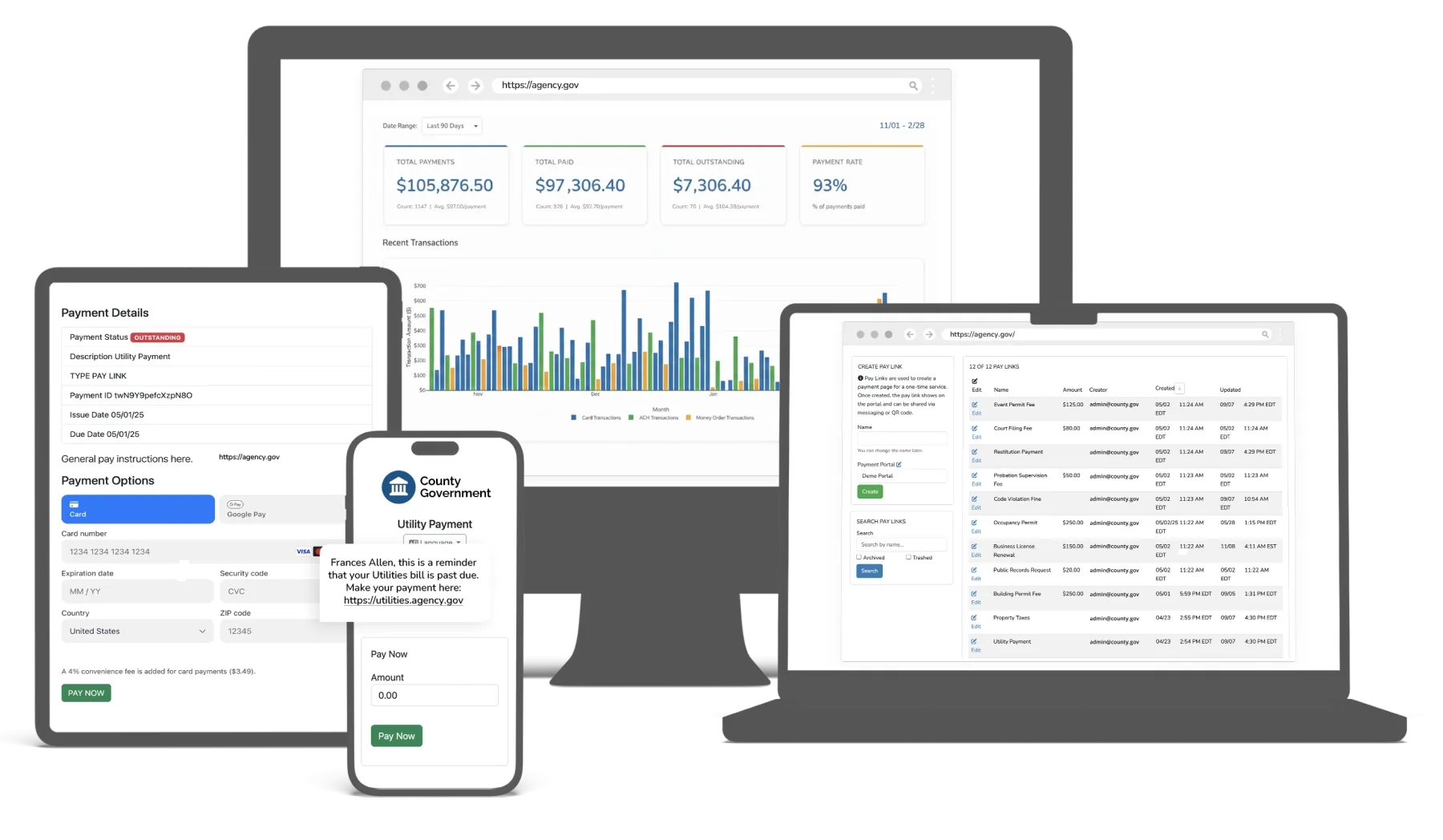
Processing fees are paid by the payer and the agency receives the full amount owed. Rates, minimum fees, the one-year term, and terminal pricing are on the pricing page.
The office settles to one registered bank account. Entities that must settle separately run as their own agency accounts under the county’s organization.
The fee is added on top of the amount owed and disclosed before the payer confirms. For example, a payer settling a $100 fine on the Preferred Plan pays $104 by card, and your agency receives the full $100.
Authorized finance users can view payout schedules, settlement statements, and transaction-level reconciliation reports in the admin portal at any time, with exports for general ledger posting and audit. Reports break down by department, payment method, and date.